
On Nuclear War – Again? (Part I)
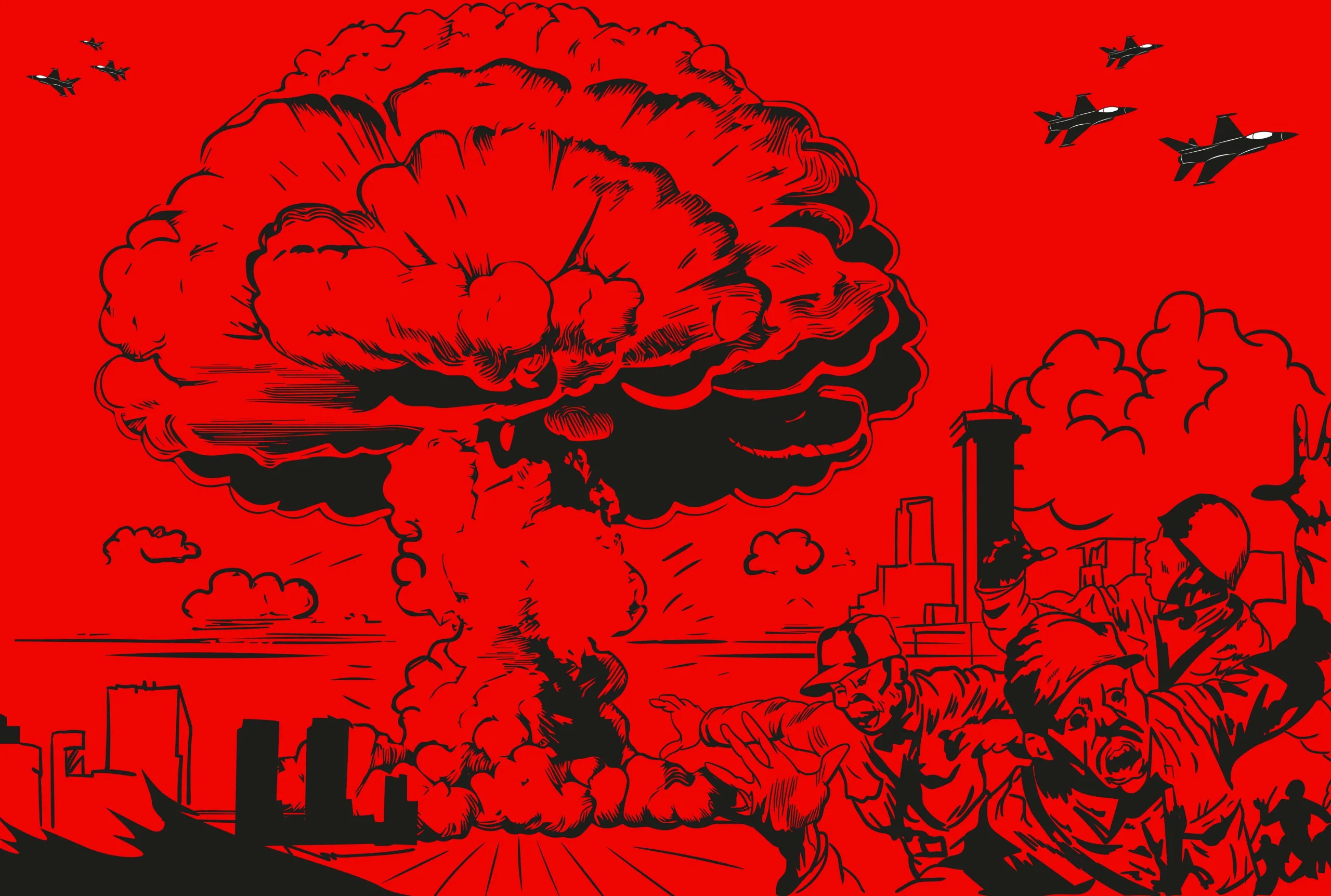
Jakarta, IDM – Well, valued IDM readers, I can see your eyebrows shooting upwards. I bet you never knew that (unless you, like this author, are “…as old as the hills”).
Luckily, that claim never came to pass. Indonesia neither needed atomic weapons nor the not inconsiderable burden that accompanies their possession. You become a grade “A” target, among other drawbacks.
A Miserable Aggressive Tendency of Humankind
Throughout human history and undoubtedly long before any writing left records, humans have been warring upon one another – for resources, ideology or even just for fun. Archaeologists digging the ruins have found prehistoric weapons crafted from flint, chert, quartzite and obsidian, as well as animal and human bones, animal horns, wood and shells.
Mankind has always needed weaponry, either to kill the prey that feeds his family and allows his group to survive or to defend that group when some unkind neighbors start to look threatening. Once families banded into gangs, gangs into warlord-led super-gangs and then kings and armies with a chain of command, weaponry evolved into more sophisticated and effective techniques of killing at-a-distance.
Each stage of warfare has escalated the impersonality of aggression. In hand-to-hand combat you can look into an enemy’s frightened eyes and watch him bleed to death; when you hurl stones or shoot arrows the enemy is visible in the distance, and may attack you. With bands of longbow-arrayed archers shooting deadly fleets of arrows, your adversary may well have been out of sight, and you may well have been unpleasantly surprised when his arrows showered down onto your side. The enemy became just an idea, a threatening phantom.
Read More: Malabar Radio Station “From Bandung to the Netherlands” – Colonial Dutch Communications
Flash-forward to the pimply computer nerd sitting in a comfortable air-conditioned room in Nevada, aiming an armed drone at an Afghani wedding party, because they “…look like terrorists”.
Military Technology Overtakes Man’s Valor
The age of steam saw metallurgy and explosive chemistry quickly move from arquebuses and blunderbusses to flintlock rifles, heavy shipboard gunnery and more powerful detonations. Mass production of brutal, lethal military technology enabled the triumphant spread of colonial power in the 19 th Century. One notable event during the Anglo-Zulu War of 1879 was the Battle of Rorke’s Drift, where the stark disparity in numbers would seem to spell doom for the foreigners: while the British force consisted of only about 120 men, they faced an attacking force of approximately 4,000 fierce Zulu warriors.
Despite being heavily outnumbered, the British managed to hold their ground and successfully defend their position, thanks to the rat-a-tat-tat of Gatling guns – an early version of the machine-gun that would define battles in the world wars of the 20 th Century. A hail of fire from the English cut through the native Zulu forces like an invisible scythe, sending bloodied Zulu survivors running for their lives. Technology triumphed over brute manpower.
During a speech at the 36th Muhammadiyah Congress in Bandung on July 24, 1965, President Soekarno, Proclamator and Founding President of the Republic of Indonesia, openly made the claim that Indonesia would develop its own atomic bomb. He expressed his support for the development of Indonesian nuclear weapons as a means to protect Indonesia’s sovereignty and to deter foreign interference.
“Lions, Led by Donkeys”
The officers fighting in Europe during World War I, do not seem to have fully appreciated the firepower of modern technology, as they sent waves of infantry across the battlefield into German machine-gun fire, with predictable results. Thus the quip from a German officer that the valiant British soldiers were commanded by inept, privileged, worthless officers: “lions, led by donkeys”.
War had previously spread to the oceans, with imperial fleets of gunboats and pirate rovers; now it engulfed the air, as rickety biplanes performed unparalleled surveillance and tangled for supremacy. I call the 20 th Century “the Irony Age” as World War I, born largely of misunderstandings and blunders, was widely, and ironically, known as “The War That Will End War”, a phrase originally coined by the famous English author H.G. Wells, in a 1914 book.
Wells’ picturesque and overly-optimistic notion was that the First World War was so shocking that it would be the conflict that would put an end to all war: nearly 15 million died, many from disease, hunger and genocide, and 25 million more – many noncombatants- suffered physical and psychological wounds. Thus, “the war to end all wars”.
Unfortunately Hitler, Tojo, Mussolini and Franklin D. Roosevelt never got the message, as the 1930s saw aggressive nation-states accelerating development of deadlier and deadlier military technology: better bombs and swifter ways to deliver them.
The build-up was the Spanish Civil War, Japanese Imperial aggression on Manchuria and China, and Hitler’s invasion of Czechoslovakia and Poland, in the quest for more German lebensraum (“living room”, the phrase used today for the territorial expansion of a “Greater Israel”, using the same genocidal tactics).
Read More: The Speelwijk Fortress A Monument To Dutch Colonial Power In Pamarican, Banten

On with the Show!
World War II, with Great Britain, the USSR, Canada, the USA and Australia on the Allied side, standing against the Axis Powers of Germany, Japan and Italy, became the deadliest conflict in history: estimated casualties numbered between 70 and 85 million – around 3-3.7% of the world’s population at the time (bear that figure in mind for a later update).
Approximately 21 to 25 million soldiers were killed. Around 50 to 55 million civilians died, including those succumbing to war-related famine, disease, and genocide. The Soviet Union and China suffered the highest number of casualties, with estimates of 20 to 27 million deaths in the Soviet Union and 15 to 20 million in China (but the television tells you how the Americans suffered and won the war).
While the massive explosive effect of a runaway chain reaction from an isotope of uranium was the oretically known early in the Century, no one was able to build a device – although German troops seized the heavy water reserves of Norway, and Werner Heisenberg, the top scientist of the Reich proposed the idea to Hitler, as follows: “One bomb could flatten a city.” Der Führer: “Go on. I’m listening.” Heisenberg (hesitant, squirming): “Only thing is… we’re re not sure ... the chain reaction could go out of control …” Hitler: “Yes?” Heisenberg (weak smile): “…and destroy the planet.” Hitler (turning away, annoyed, shouting): “Who are these idiot scientists? Get them out of here! My stomach is killing me.”
Read More: Indonesia Must Prepare for the Prospect of Pacific War II
Across the Atlantic, a group of physicists and other scientists were working in a super-secret facility in New Mexico, on a big, ugly metal sphere mounted off the ground, whose 6.1kg. of plutonium would hopefully go pop. To put it into perspective, the explosion of the “Grand Slam” and “Tallboy” bombs used to attack targets in World War II equaled 10 tons of TNT. The Trinity test of the first atomic device in New Mexico yielded a blast measured at 20,000 tons. See where this is going?
Cat is out of the Bag
War in the European theater concluded in May 1945 (Italy had surrendered almost two years earlier), several months before the successful detonation of a nuclear advice. When American scientist Robert Oppenheimer was asked whether he had any regrets about building the world’s first atomic bomb, he smiled “My only regret is that we did not have the opportunity to test it out over Germany”. He was a Jew and knew of the Holocaust. The Japanese were not so lucky, getting whacked at Hiroshima and Nagasaki, resulting in the dopey Emperor Hirohito finally waking up to reality, and commanding a surrender.
While the Americans were smugly triumphant about being the only major power to have atomic weaponry, Soviet-friendly spies had been working on the project at Los Alamos and within a couple of years the USSR carried out their first atmospheric test of an atomic bomb. The new arms race was on, and so was the Cold War of East and West. (To be continued)
Recommended for You
 OPINION
A Brief History of Nuclear Weapons and Global Diplomacy (Part II / II)
 OPINION
Indonesia Must Prepare for the Prospect of Pacific War II
 WORLDWIDE
Quo Vadis, China Taiwan Unification?
 TECHNOLOGY
KAAN Turkey’s First Indigenous Fifth Generation Fighter
 PHOTOSTORY
Palestinian Students In Indonesia: Struggling For Freedom Through Education
 HISTORY
Malabar Radio Station “From Bandung to the Netherlands” – Colonial Dutch Communications
 NATIONAL DEFENSE
Surabaya Central Naval Museum Showcasing History Using Artificial Intelligence
 INTERVIEW-EN
Semar Sentinel Defense Analyst M. Fauzan Malufti: Indonesian Future Leaders Must be More Knowledgeable about Defense
 TECHNOLOGY
Get To Know FREMM, The European Sea Guardian
 HISTORY
The Speelwijk Fortress A Monument To Dutch Colonial Power In Pamarican, Banten
 PHOTOSTORY
Sergeant Major (Retd.) Muchari Malikin Surviving Amid A Hail of Hot Bullets
 WORLDWIDE
The Blessing and Curse of Being Embraced: Pacific Island Countries in A Competitive Geopolitical Struggle
 HISTORY
Tracing The History of The Siliwangi “Maung” Troop at The Mandala Wangsit Siliwangi Museum
 TECHNOLOGY
The Super Advanced Turkish-Made ANKA Combat Drone
 HISTORY
The Japanese and Dutch Caves in Dago Pakar The Symbol of Foreign Occupation in The Sundanese Land
 TECHNOLOGY
Artificial Intelligence: AUKUS’ Advanced Technology of Choice for Power Projection
 HISTORY
Traces of The Legiun Mangkunegaran’s Glory in The Indonesian Archipelago
National Defense
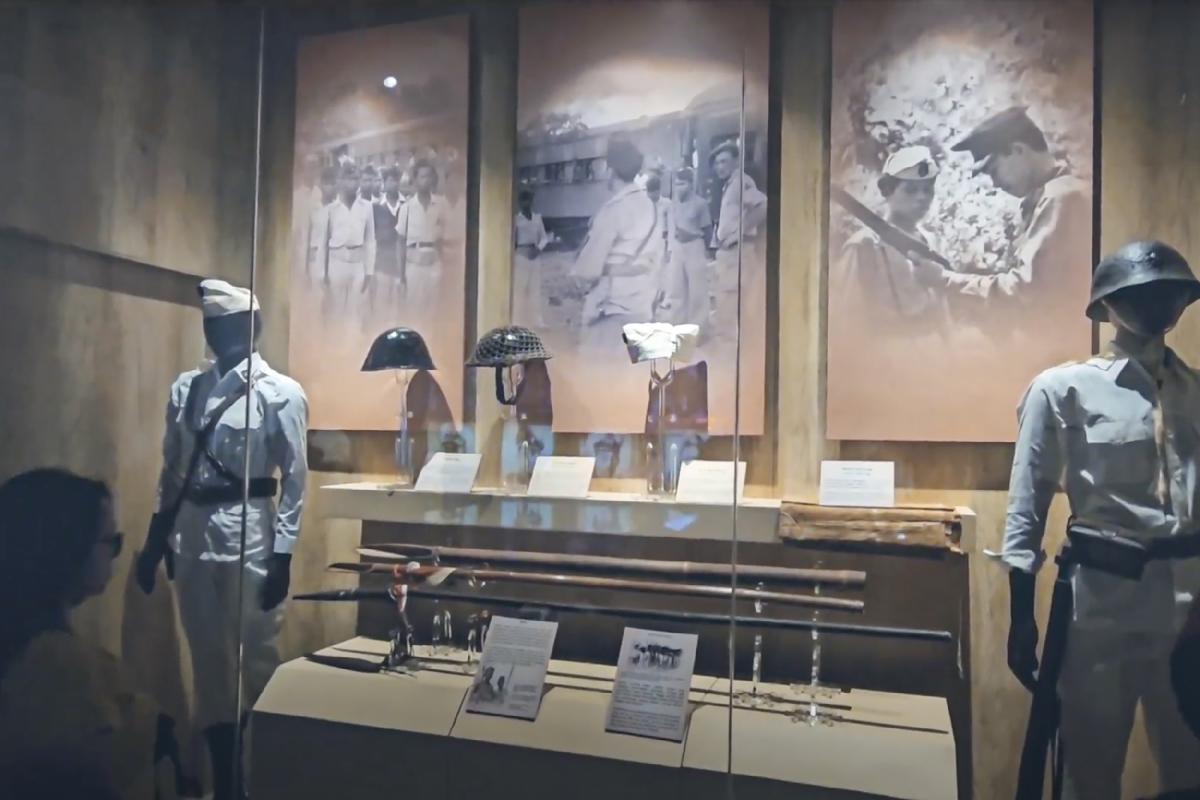
Surabaya Central Naval Museum Showcasing History Using Artificial Intelligence
The museum, which literally translates as “At sea we are victorious”, was built in 2022, during the tenure of Chief of Naval Staff (KSAL) Adm. (Retd.) Yudo Margono. A year later, on September 11, 2023, the museum was completed and inaugurated by the current KSAL Adm. Muhammad Ali. But it was only open to the general public on January 21, 2024.
Technology
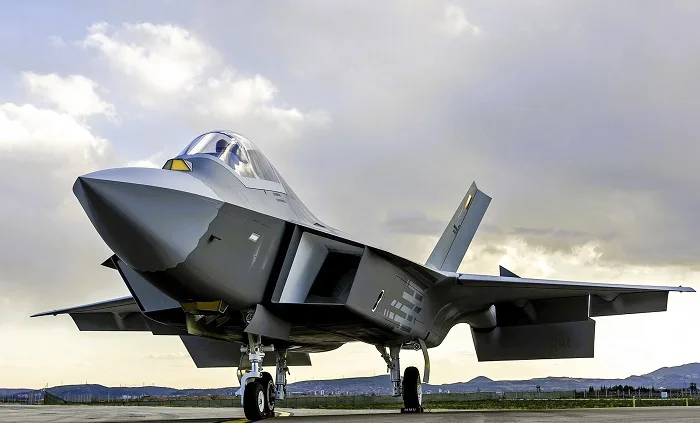
KAAN Turkey’s First Indigenous Fifth Generation Fighter
The first flight lasted 13 minutes and reached a speed of 230 knots at an altitude of 8,000 feet,” read a statement from the manufacturer, state-owned Turkish Aerospace Industries (TUSAS). The KAAN project was launched in 2016 with the aim of replacing Turkish Air Force’s aging F-16 fleet and to be sold to foreign governments.
Photo Story
History
Malabar Radio Station “From Bandung to the Netherlands” – Colonial Dutch Communications
The Malabar station complex contains remnants of the radio station’s former offices and employee residences, in front of the camping and parking area. An information board offers a variety of tourist attractions around Mount Puntang, including coffee tourism, waterfall visits, and cycling tours.