
A Brief History of Nuclear Weapons and Global Diplomacy (Part II / II)
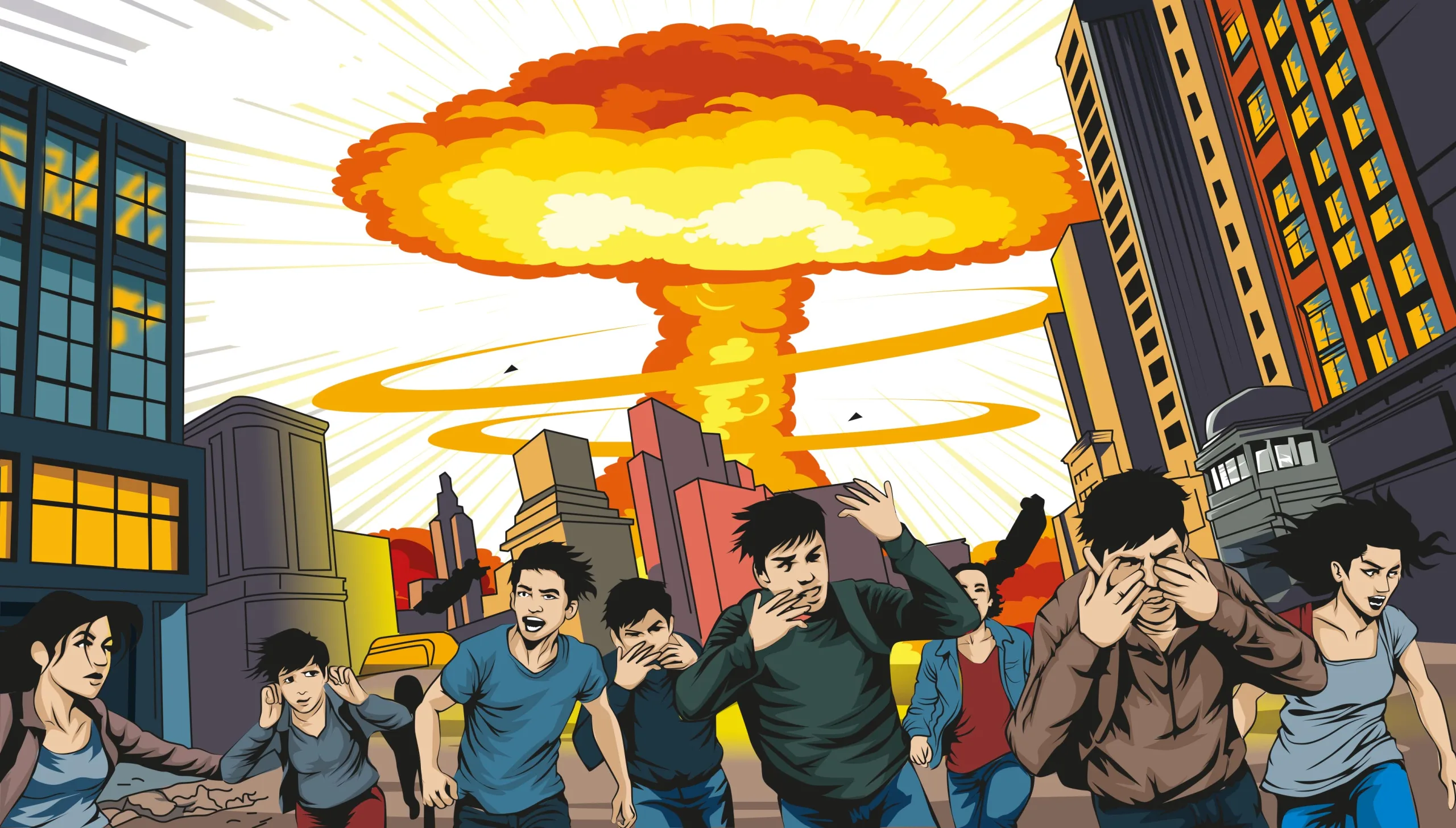
We continue our discussion of how nuclear energy, first harnessed in 1942, in a makeshift laboratory under an old football stadium at the University of Chicago. The strange, almost mystical powers of certain elements had been known since 1896, when French physicist Henri Becquerel discovered that uranium salts emitted strange invisible rays - a force that could penetrate metals and darken photographic plates.
Jakarta, IDM – Just two years later fellow Frenchmen Marie and Pierre Curie identified polonium and radium, coining the term "radio-active". Marie Curie, a dazzling star of science, shone with such brilliance that she died of radio-active poisoning, and her corpse was so "hot" that she had to be buried in a lead-lined coffin. That's dedication, folks!
Across the English Channel, eminent British scientist Ernest Rutherford discovered the atomic nucleus in 1911, with unimaginably primitive tools. He was the first to propose the concept of "nuclear transmutation (think BANG!).
Italian physicist Enrico Fermi and his team bombarded uranium with neutrons in 1934, which does not sound like a very friendly act. But they did succeed in producing new elements, and thus hinting at the possibility of nuclear fission (C*R*A*C*K then BANG). Fermi's wife was Jewish and he did not feel comfortable with the Fascist dictatorship of Benito Mussolini, so after taking a Nobel Prize in Stockholm he made a big detour and ended up in the USA, where in 1942 he led a team that achieved the first con-trolled, self-sustaining nuclear chain reaction: "Chicago Pile-1 (CP-1)" at the University of Chicago-part of the super-secret Manhattan Project. The American Government was deathly afraid that the Nazis would develop an atomic weapon before they did and that would have tipped the balance drastically. Even though the Wehrmacht secured a heavy water plant in Norway, research & development on nuclear weapons never went forward in the Third Reich.
These discoveries and experiments laid the groundwork for the development of atomic energy and nuclear weapons.
Years after the War, a reporter asked scientist Robert Oppenheimer whether he had any regrets about working on a nuclear weapon. He answered "My only regret is that the War in Europe was over before we had a chance to use it on Germany", undoubtedly thinking of the horrendous treatment of his fellow Jews by the Nazi regime.
By early 1945 the former Japanese Empire had shrunk to the home islands, which were cut off by the American Navy. The em-battled Japanese were on the verge of starving to death, but being among the most stub-born peoples on Earth refused to surrender.
A land invasion would have killed mil-lions of Allies and Japanese as well; thus, a "shock treatment" of two atomic bombs obliterating the strategic cities of Hiroshima and Nagasaki were enough to awaken His Majesty Emperor Hirohito out of his dreamy absent-mindedness and decree that national suicide was not a valid way to conclude his Showa-era reign.
American authorities went to great lengths to suppress photos and film of the devastation wrought upon Hiroshima and Nagasaki... the bodies burnt to a crisp or even simply turned into a shadow upon stone ... city blocks flattened into rubble... years of torment and steady dying from radiation poisoning, leukemia, birth abnormalities and other deep suffering, often by women and children.
The Soviets soon had the bomb, thanks to insidious spies like Dr. Klaus Fuchs, who had stolen atomic secrets as he worked on the first experimental nuclear weapon in Los Alamos.
Bigger and better-or rather bigger and more ominous, frightening and intimidating - meant that the hydrogen bomb soon followed: it was detonated by an atomic explosion, and from "kilotons" of explosive power the destructive force of newer weapons was calculated in megatons: one bomb delivered by an aircraft or launched on a trajectory into the upper atmosphere, targeted on the other side of the planet, could level a city the size of Dallas, Shanghai or Berlin, leaving it radioactive and uninhabitable for thousands of years.
Delivery systems escalated along with the force of the weapons. From B-29s and B-36s to B-52s, on one side, and the ancient but reliable turbo-prop TU-95 on the Soviet side, to intercontinental ballistic missiles (ICRMs). Unstoppable, hypersonic and carrying a megaton payload or even multiple warheads; that is the environment those of us who attained majority in the 1950s and 160s faced.
In short, it was an era known as the "Balance of Terror", or "Mutually-Assured Destruction" (MAD). No matter how good the defense a nation might put up, if it was worth targeting, then it would die, with most of its citizens, in a very terrible fashion.
The arms race of the 1950s saw a number of countries investing heavily into the production of their own nuclear arsenals: the UK and France soon had their forces, though of a considerably smaller scale than that of the major powers.
Soon there was proliferation, with both India and Pakistan acquiring nukes from their allies; South Africa became the first to ever voluntarily give up its nuclear weapons program, setting a fine example for other countries.
By the 1970s, the nuclear powers were frankly scaring each other, and scaring their population, half to death with the prospect of a thermonuclear exchange, either on purpose or accidental.
Nuclear weapons are unique in that they are only useful as deterrents; "winning" a nu-clear war became academic as soon as they proliferated into other nations' arsenals.
An Israeli spy stole American nuclear technology and today Israel has several hundred hydrogen bombs. Defector and peace crusader Mordechai Vanunu claims that if Israel is wiped out them the Israeli air force will bomb European capitals: Rome, London, Paris, Berlin with atomic weapons.
The closest that the major powers ever came to a full-scale nuclear exchange was the reaction of the US Government to the USSR positioning nuclear weapons on the island of Cuba, whose bearded leader, Fidel Castro, had encouraged to defend the island against yet another American invasion (see: "Godfather II")

Both sides were on high alert: bomber bases were sealed off and poised to take off for a pass over the enemy; ICBM silos were on a hair-trigger.
President John F. Kennedy, faced with the terrible prospect of either backing down and allowing the Soviets to have missiles 150km off the American mainland, or going to war against the USSR, openly mused "Can I afford to lose twenty million voters?" That was a conservative estimate as to how many Americans would die in a first strike.
My elder brother, a career US Air Force officer and tanker pilot, joked "The only danger to our attack on Russia would he from our planes running into one another." Indeed, the USSR was not nearly as strong or armed as it would be in subsequent years. China had few of these weapons and nothing to deliver them with.
Soviet Ambassador Anatoly Fyodorovich Dobrynin was of great service as a counselor to President Kennedy, as the "hotline" between Washington and Moscow buzzed with threats, offers and counter-offers.
The prominent Soviet diplomat was so trusted and effective that he continued to serve as the USSR Ambassador to the United States until 1986.
Proliferation means that while smaller, less wealthy countries might want to join the "nuclear club", such a move comes at a price. Founding President and Proclamator Soekarno once claimed that his country would have its own atomic weapons, but fortunately that never came to pass. So even in the event of a nuclear exchange, Indonesia would likely be ignored - and spared destruction.
Remember how Secretary of State Henry Kissinger once remarked, about the possibility of President Thieu of South Vietnam suffering the same fate as the tragic President Ngo Diem Dinh murdered with American complicity - that "...to be an enemy of the United States is dangerous, but to be its ally is fatal."
Australia has no atomic weapons but it might still be targeted in the case of a full-scale nuclear exchange. Here is what one very astute Australian mused, about his country's awkward alliance with the USA, on the internet:
"Frequently cited as the The Most Livable City In the World... the southern Australian city of...
"Melbourne might indeed attract more strategic missile strikes than any other targets in Australia, military and civilian, given its central part in the US space defense/offense systems.
"Say four? Garden Island oil facility, oil refinery further off, the St. Kilda Road military base (near the Art Centre and other high culture facilities) and the Watsonia signals switch. Most livable city one day. Ashtray the next.
"Indeed could it be asserted that in a war between The US & Russia or The US & China, the battles for supremacy take place in the expendable vassal states (oops I mean allies; better still-the term «the useful idiots comes to mind).
Read More: On Nuclear War – Again? (Part I)
"Paradoxically, the principle protagonists remain unscathed - at least temporarily.
"The Armed Madhouse, being Washington, if treated as an actual person (as corporations are), exhibits the traits and conduct of a paranoid psychopath, as described in the DSM V.
"Amongst the most distinguished of American political scientists, two describe the present construction of the Republican Party as a radical insurgency, a term one would attach variously to their Middle Eastern "enemies of the month" pinups.
"Bit by bit does the American state descend into chthonic paranoid fantasies of foreign threats and domestic zombies, while waging good wars for needed resources.
"May well may they well finish off us all."
The war in Ukraine, now in its death throes as the implacable Russian army closes in on the
Capital, is a "proxy war": NATO (meaning = the USA, as the "big boss") wants to be able to weaken the Russian military, ruin its economy and inspire a "color revolution" to overthrow its government. None of that is succeed-ing, alas. (The last time the USA won a war was 1945, but that was mostly a Russian effort anyway.)
The Americans have the cute idea of positioning their nuclear missiles on Ukraine's eastern border, three minutes as the bird flies from the Kremlin.
Moscow, understandably, is not thrilled by the idea of a "decapitation strike" (the Pentagon's poetic turn of phrase). They say that in case the nerve center of the Russian Federation is destroyed in a sneak attack, an auto-mated system of retaliation will launch nuclear weapons at the USA from sub-marines, land bases and even from or bit, ensuring the human race will all but end in MAD.
The unbelievable part is that some in the Pentagon seem fine with that, as long as Russia is destroyed.
Maybe nuclear radiation or even obsessing about nuclear weaponry-drives you crazy. Let's hope not.
Recommended for You
 OPINION
On Nuclear War – Again? (Part I)
 OPINION
Indonesia Must Prepare for the Prospect of Pacific War II
 WORLDWIDE
Quo Vadis, China Taiwan Unification?
 TECHNOLOGY
KAAN Turkey’s First Indigenous Fifth Generation Fighter
 PHOTOSTORY
Palestinian Students In Indonesia: Struggling For Freedom Through Education
 HISTORY
Malabar Radio Station “From Bandung to the Netherlands” – Colonial Dutch Communications
 NATIONAL DEFENSE
Surabaya Central Naval Museum Showcasing History Using Artificial Intelligence
 INTERVIEW-EN
Semar Sentinel Defense Analyst M. Fauzan Malufti: Indonesian Future Leaders Must be More Knowledgeable about Defense
 TECHNOLOGY
Get To Know FREMM, The European Sea Guardian
 HISTORY
The Speelwijk Fortress A Monument To Dutch Colonial Power In Pamarican, Banten
 PHOTOSTORY
Sergeant Major (Retd.) Muchari Malikin Surviving Amid A Hail of Hot Bullets
 WORLDWIDE
The Blessing and Curse of Being Embraced: Pacific Island Countries in A Competitive Geopolitical Struggle
 HISTORY
Tracing The History of The Siliwangi “Maung” Troop at The Mandala Wangsit Siliwangi Museum
 TECHNOLOGY
The Super Advanced Turkish-Made ANKA Combat Drone
 HISTORY
The Japanese and Dutch Caves in Dago Pakar The Symbol of Foreign Occupation in The Sundanese Land
 TECHNOLOGY
Artificial Intelligence: AUKUS’ Advanced Technology of Choice for Power Projection
 HISTORY
Traces of The Legiun Mangkunegaran’s Glory in The Indonesian Archipelago
National Defense
Surabaya Central Naval Museum Showcasing History Using Artificial Intelligence
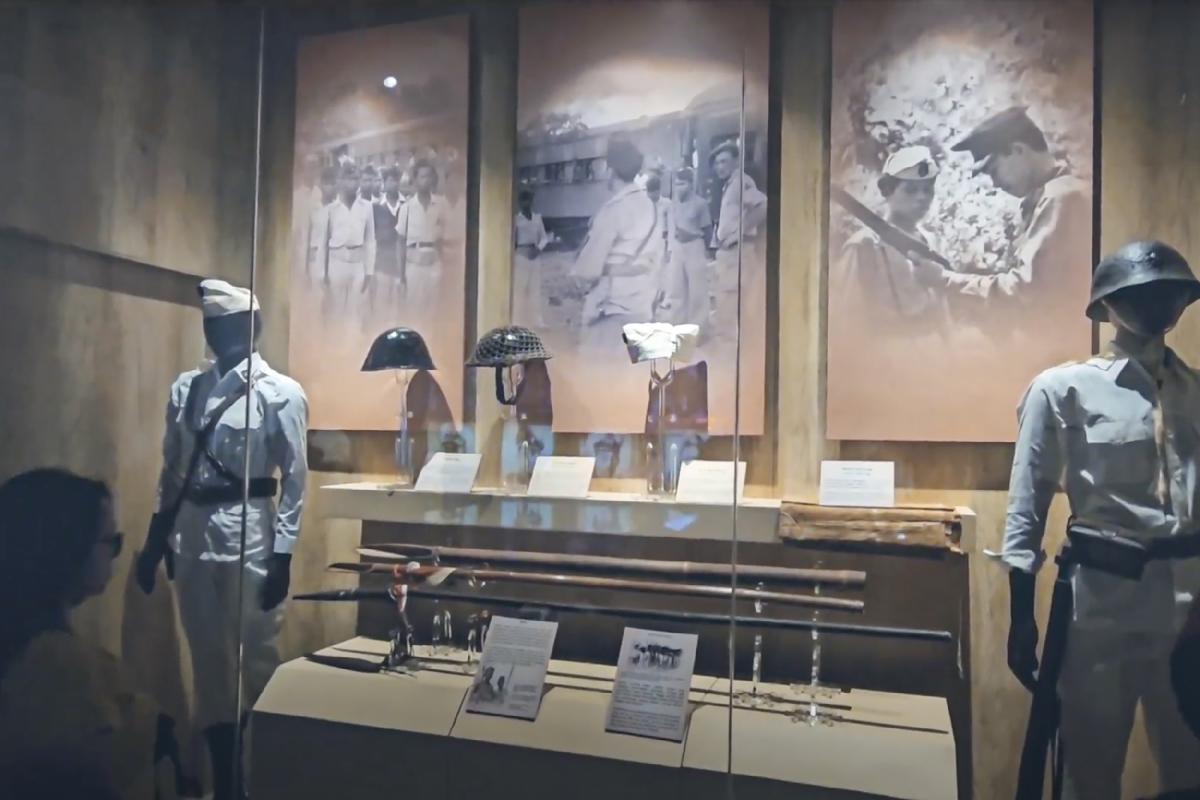
The museum, which literally translates as “At sea we are victorious”, was built in 2022, during the tenure of Chief of Naval Staff (KSAL) Adm. (Retd.) Yudo Margono. A year later, on September 11, 2023, the museum was completed and inaugurated by the current KSAL Adm. Muhammad Ali. But it was only open to the general public on January 21, 2024.
Technology
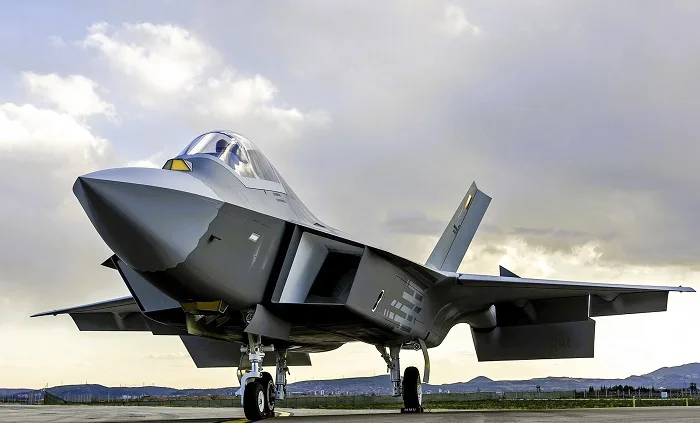
KAAN Turkey’s First Indigenous Fifth Generation Fighter
The first flight lasted 13 minutes and reached a speed of 230 knots at an altitude of 8,000 feet,” read a statement from the manufacturer, state-owned Turkish Aerospace Industries (TUSAS). The KAAN project was launched in 2016 with the aim of replacing Turkish Air Force’s aging F-16 fleet and to be sold to foreign governments.
Photo Story
History
Malabar Radio Station “From Bandung to the Netherlands” – Colonial Dutch Communications
The Malabar station complex contains remnants of the radio station’s former offices and employee residences, in front of the camping and parking area. An information board offers a variety of tourist attractions around Mount Puntang, including coffee tourism, waterfall visits, and cycling tours.